



在上一篇博客中,我们了解了如何使用 2 个插件 apoc 和图形数据科学库 - gds 在本地安装和设置 neo4j。在这篇博客中,我将获取一个玩具数据集(电子商务网站中的产品)并将其存储在 neo4j 中。
为 neo4j 分配足够的内存
在开始加载数据之前,如果您的用例中有大量数据,请确保为 neo4j 分配了足够的内存。为此:
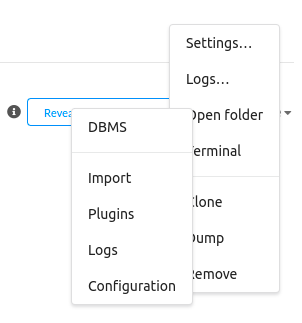
- 点击打开右侧的三个点

- 点击
- 打开文件夹-> 配置
- 点击
- neo4j.conf
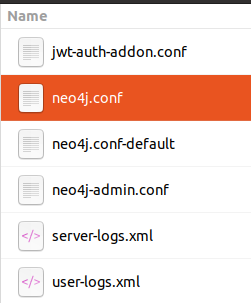
- 在neo4j.conf中搜索
- heap,取消第77、78行的注释,并将256m更改为2048m,这样可以确保为neo4j中的数据存储分配2048mb。


MTTSHOP包包免费商城系统
下载
一款非常包包、衣服、鞋子类网站,页面干净清洁、一目了然,mttshop打造精致、简单、易用、免费的商城。 系统要求:IIS5.1以后,必须安装.net 3.5 安装步骤: 1、下载完成后,直接解压文件mttshop.rar 2、附加数据库:解压后的可以找一个叫db的文件夹,解压后直接附加就可以,支持SQL 2000、2005、2008 3、配置web.config文件,找到key=&qu
- 图有两个主要组成部分:节点和关系,让我们先创建节点,然后再建立关系。
- 我正在使用的数据在这里 - data
- 使用这里提供的requirements.txt来创建一个python虚拟环境-requirements.txt
- 让我们定义各种函数来推送数据。
- 导入必要的库
import pandas as pd
from neo4j import graphdatabase
from openai import openai
- 我们将使用 openai 来生成嵌入
client = openai(api_key="")
product_data_df = pd.read_csv('../data/product_data.csv')
- 生成嵌入
def get_embedding(text):
    """
    used to generate embeddings using openai embeddings model
    :param text: str - text that needs to be converted to embeddings
    :return: embedding
    """
    model = "text-embedding-3-small"
    text = text.replace("\n", " ")
    return client.embeddings.create(input=[text], model=model).data[0].embedding
- 根据我们的数据集,我们可以有两个唯一的节点标签,
- category:产品类别,product:产品名称。让我们创建类别标签,neo4j 提供了一种称为属性的东西,您可以将它们想象为特定节点的元数据。这里 name 和 embedding 是属性。因此,我们将类别名称及其相应的嵌入存储在数据库中。
def create_category(product_data_df):
    """
    used to generate queries for creating category nodes in neo4j
    :param product_data_df: pandas dataframe - data
    :return: query_list: list - list containing all create node queries for category
    """
    cat_query = """create (a:category {name: '%s', embedding: %s})"""
    distinct_category = product_data_df['category'].unique()
    query_list = []
    for category in distinct_category:
        embedding = get_embedding(category)
        query_list.append(cat_query % (category, embedding))
    return query_list
- 类似地,我们可以创建产品节点,这里的属性是
- name,description,price,warranty_period,available_stock,review_ rating,product_release_date,embedding
def create_product(product_data_df):
    """
    used to generate queries for creating product nodes in neo4j
    :param product_data_df: pandas dataframe - data
    :return: query_list: list - list containing all create node queries for product
    """
    product_query = """create (a:product {name: '%s', description: '%s', price: %d, warranty_period: %d,
    available_stock: %d, review_rating: %f, product_release_date: date('%s'), embedding: %s})"""
    query_list = []
    for idx, row in product_data_df.iterrows():
        embedding = get_embedding(row['product name'] + " - " + row['description'])
        query_list.append(product_query % (row['product name'], row['description'], int(row['price (inr)']),
                                           int(row['warranty period (years)']), int(row['stock']),
                                           float(row['review rating']), str(row['product release date']), embedding))
    return query_list
- 现在让我们创建另一个函数来执行上述两个函数生成的查询。适当更新您的用户名和密码。
def execute_bulk_query(query_list):
    """
    executes queries is a list one by one
    :param query_list: list - list of cypher queries
    :return: none
    """
    url = "bolt://localhost:7687"
    auth = ("neo4j", "neo4j@123")

    with graphdatabase.driver(url, auth=auth) as driver:
        with driver.session() as session:
            for query in query_list:
                try:
                    session.run(query)
                except exception as error:
                    print(f"error in executing query - {query}, error - {error}")
- 完整代码
import pandas as pd
from neo4j import graphdatabase
from openai import openai

client = openai(api_key="")
product_data_df = pd.read_csv('../data/product_data.csv')


def preprocessing(df, columns_to_replace):
    """
    used to preprocess certain column in dataframe
    :param df: pandas dataframe - data
    :param columns_to_replace: list - column name list
    :return: df: pandas dataframe - processed data
    """
    df[columns_to_replace] = df[columns_to_replace].apply(lambda col: col.str.replace("'s", "s"))
    df[columns_to_replace] = df[columns_to_replace].apply(lambda col: col.str.replace("'", ""))
    return df


def get_embedding(text):
    """
    used to generate embeddings using openai embeddings model
    :param text: str - text that needs to be converted to embeddings
    :return: embedding
    """
    model = "text-embedding-3-small"
    text = text.replace("\n", " ")
    return client.embeddings.create(input=[text], model=model).data[0].embedding


def create_category(product_data_df):
    """
    used to generate queries for creating category nodes in neo4j
    :param product_data_df: pandas dataframe - data
    :return: query_list: list - list containing all create node queries for category
    """
    cat_query = """create (a:category {name: '%s', embedding: %s})"""
    distinct_category = product_data_df['category'].unique()
    query_list = []
    for category in distinct_category:
        embedding = get_embedding(category)
        query_list.append(cat_query % (category, embedding))
    return query_list


def create_product(product_data_df):
    """
    used to generate queries for creating product nodes in neo4j
    :param product_data_df: pandas dataframe - data
    :return: query_list: list - list containing all create node queries for product
    """
    product_query = """create (a:product {name: '%s', description: '%s', price: %d, warranty_period: %d,
    available_stock: %d, review_rating: %f, product_release_date: date('%s'), embedding: %s})"""
    query_list = []
    for idx, row in product_data_df.iterrows():
        embedding = get_embedding(row['product name'] + " - " + row['description'])
        query_list.append(product_query % (row['product name'], row['description'], int(row['price (inr)']),
                                           int(row['warranty period (years)']), int(row['stock']),
                                           float(row['review rating']), str(row['product release date']), embedding))
    return query_list


def execute_bulk_query(query_list):
    """
    executes queries is a list one by one
    :param query_list: list - list of cypher queries
    :return: none
    """
    url = "bolt://localhost:7687"
    auth = ("neo4j", "neo4j@123")

    with graphdatabase.driver(url, auth=auth) as driver:
        with driver.session() as session:
            for query in query_list:
                try:
                    session.run(query)
                except exception as error:
                    print(f"error in executing query - {query}, error - {error}")

# preprocessing
product_data_df = preprocessing(product_data_df, ['product name', 'description'])

# create category
query_list = create_category(product_data_df)
execute_bulk_query(query_list)

# create product
query_list = create_product(product_data_df)
execute_bulk_query(query_list)
- 我们将在
- category 和 product 之间创建关系,该关系的名称为 category_contains_product
from neo4j import GraphDatabase
import pandas as pd

product_data_df = pd.read_csv('../data/product_data.csv')


def preprocessing(df, columns_to_replace):
    """
    Used to preprocess certain column in dataframe
    :param df: pandas dataframe - data
    :param columns_to_replace: list - column name list
    :return: df: pandas dataframe - processed data
    """
    df[columns_to_replace] = df[columns_to_replace].apply(lambda col: col.str.replace("'s", "s"))
    df[columns_to_replace] = df[columns_to_replace].apply(lambda col: col.str.replace("'", ""))
    return df


def create_category_food_relationship_query(product_data_df):
    """
    Used to create relationship between category and products
    :param product_data_df: dataframe - data
    :return: query_list: list - cypher queries
    """
    query = """MATCH (c:Category {name: '%s'}), (p:Product {name: '%s'}) CREATE (c)-[:CATEGORY_CONTAINS_PRODUCT]->(p)"""
    query_list = []
    for idx, row in product_data_df.iterrows():
        query_list.append(query % (row['Category'], row['Product Name']))
    return query_list


def execute_bulk_query(query_list):
    """
    Executes queries is a list one by one
    :param query_list: list - list of cypher queries
    :return: None
    """
    url = "bolt://localhost:7687"
    auth = ("neo4j", "neo4j@123")

    with GraphDatabase.driver(url, auth=auth) as driver:
        with driver.session() as session:
            for query in query_list:
                try:
                    session.run(query)
                except Exception as error:
                    print(f"Error in executing query - {query}, Error - {error}")


# PREPROCESSING
product_data_df = preprocessing(product_data_df, ['Product Name', 'Description'])

# CATEGORY - FOOD RELATIONSHIP
query_list = create_category_food_relationship_query(product_data_df)
execute_bulk_query(query_list)
- 通过使用 match 查询来匹配已经创建的节点,我们在它们之间建立关系。
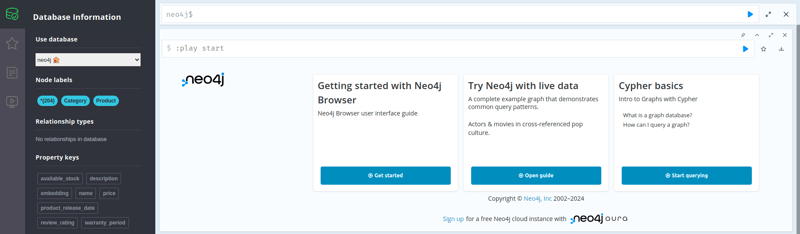
将鼠标悬停在
open图标上,然后单击neo4j浏览器以可视化我们创建的节点。

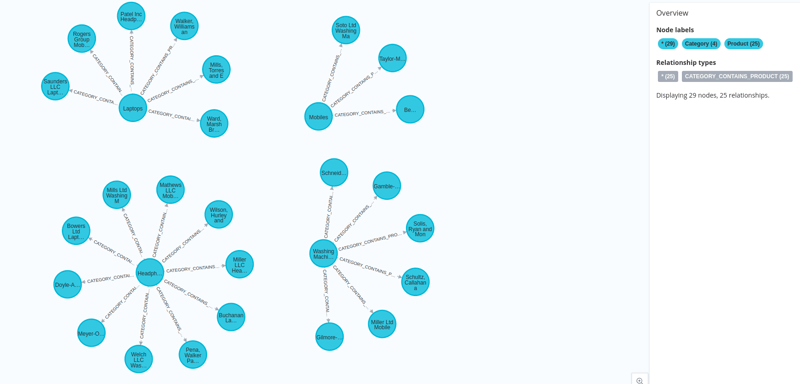
在接下来的博客中,我们将看到如何使用 python 构建图形查询引擎并使用获取的数据进行增强生成。
linkedin - https://www.linkedin.com/in/praveenr2998/
github - https://github.com/praveenr2998/creating-lightweight-rag-systems-with-graphs/tree/main/push_data_to_db




