
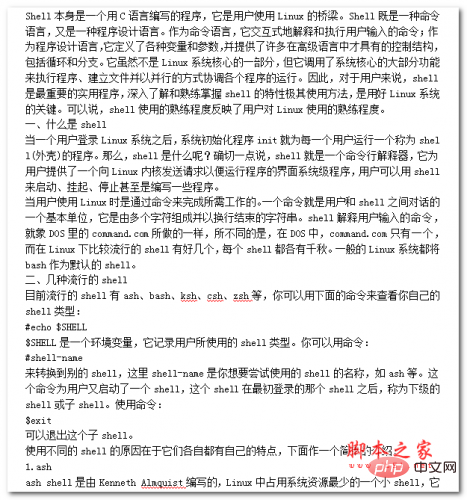
Shell脚本编写基础 中文WORD版
下载
Shell本身是一个用C语言编写的程序,它是用户使用Linux的桥梁。Shell既是一种命令语言,又是一种程序设计语言。作为命令语言,它交互式地解释和执行用户输入的命令;作为程序设计语言,它定义了各种变量和参数,并提供了许多在高级语言中才具有的控制结构,包括循环和分支。它虽然不是Linux系统核心的一部分,但它调用了系统核心的大部分功能来执行程序、建立文件并以并行的方式协调各个程序的运行。因此,对于用户来说,shell是最重要的实用程序,深入了解和熟练掌握shell的特性极其使用方法,是用好Linux系统
最近有个需求就是页面上执行shell命令,
第一种 就是os.system,
代码如下:
os.system('cat /proc/cpuinfo')但是发现页面上打印的命令执行结果 0或者1,当然不满足需求了。
尝试第二种方案 os.popen()
代码如下:
output = os.popen('cat /proc/cpuinfo')
print output.read()
通过 os.popen() 返回的是 file read 的对象,对其进行读取 read() 的操作可以看到执行的输出。但是无法读取程序执行的返回值)
尝试第三种方案 commands.getstatusoutput() 一个方法就可以获得到返回值和输出,非常好用。
代码如下:
(status, output) = commands.getstatusoutput('cat /proc/cpuinfo')
print status, output
Python Document 中给的一个例子,
代码如下:
>>> import commands
>>> commands.getstatusoutput('ls /bin/ls')
(0, '/bin/ls')
>>> commands.getstatusoutput('cat /bin/junk')
(256, 'cat: /bin/junk: No such file or directory')
>>> commands.getstatusoutput('/bin/junk')
(256, 'sh: /bin/junk: not found')
>>> commands.getoutput('ls /bin/ls')
'/bin/ls'
>>> commands.getstatus('/bin/ls')
'-rwxr-xr-x 1 root 13352 Oct 14 1994 /bin/ls'