



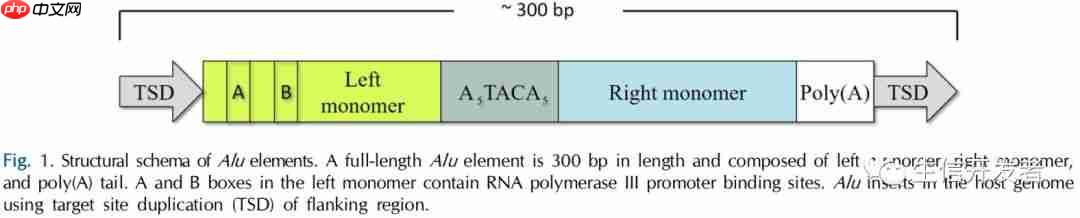
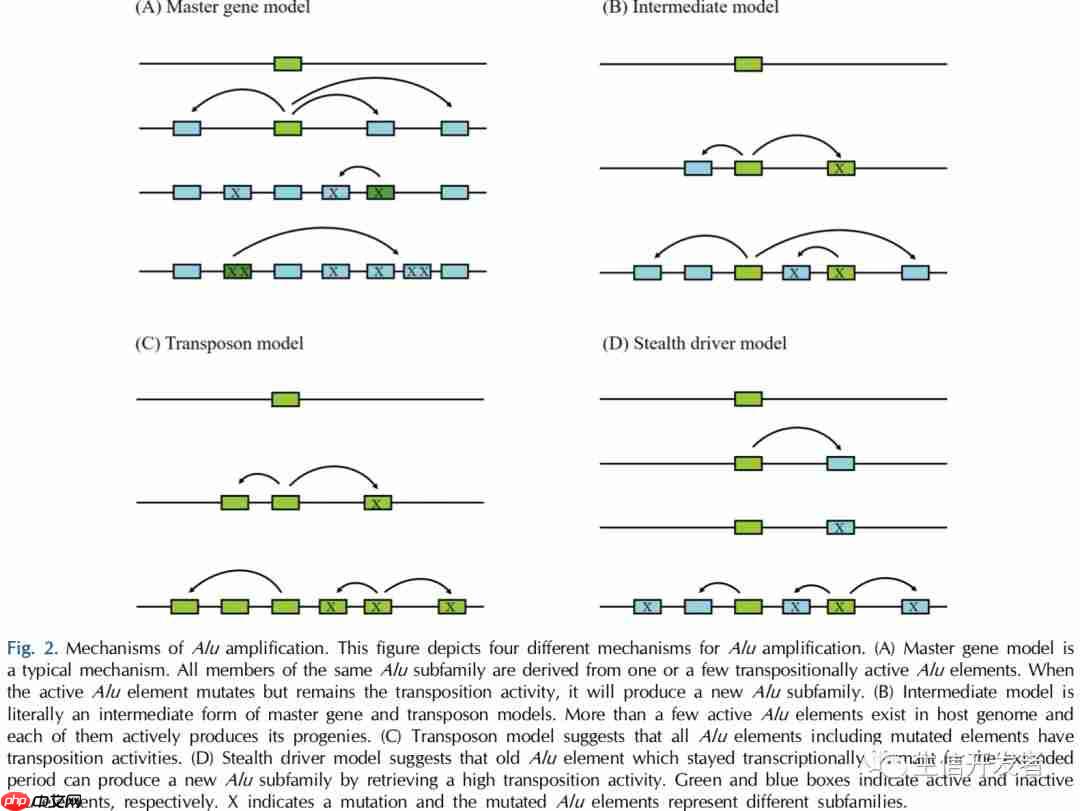
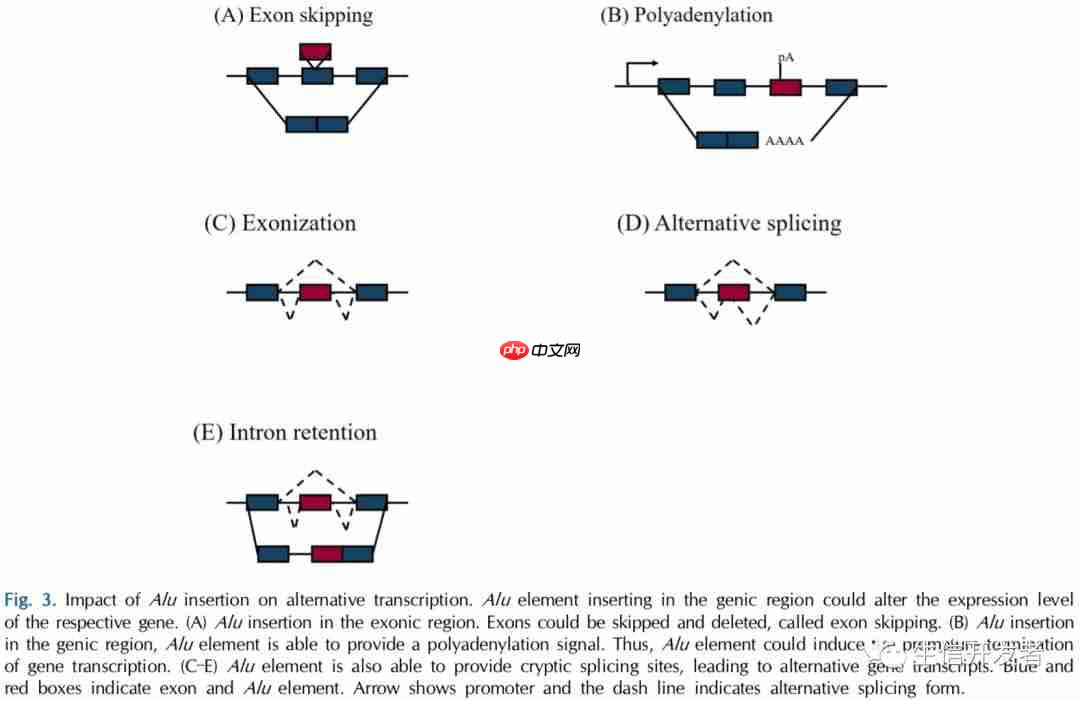
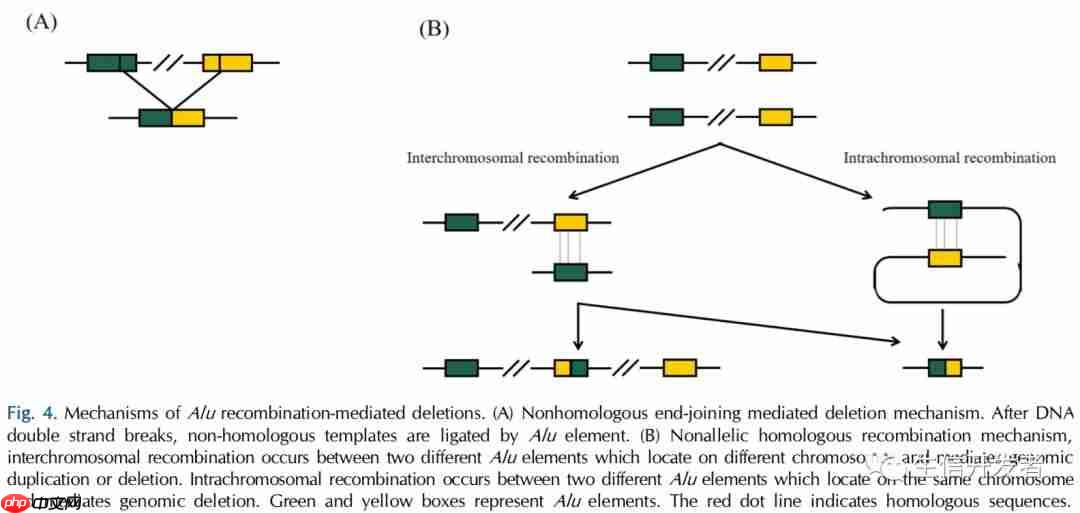
transposable elements are significant contributors to genomic instability, affecting the genome through mechanisms like new insertions, insertion-induced deletions, and recombination-related deletions. among these, the alu element stands out as the most prevalent, making up about 10% of the human genome. this element first appeared in the primate genome approximately 65 million years ago and has since proliferated across human and other primate genomes. as a non-autonomous retrotransposon, alu relies on the l1 enzyme system for retrotransposition. the 'master gene' model is widely accepted to account for the spread of alu elements in primates. this model suggests that mutations in the master gene lead to the emergence of various alu subfamilies, with most alu elements being propagated from highly active master genes. due to their high frequency and similarity in sequence, alu elements often contribute to genomic rearrangements in humans, which can result in genetic conditions including inherited diseases, blood disorders, and neurological disorders. approximately 0.1% of human genetic disorders are linked to alu elements. these elements are transcribed by rna polymerase iii and reinserted into the genome with the assistance of autonomous line retroelements. given their tendency to be located near or within gene-rich areas, alu elements can influence gene expression through various mechanisms at both the dna and rna levels. they play a crucial role in gene regulation.

References:

Songmi Kim, Chun-Sung Cho, Kyudong Han, Jungnam Lee. Genomics Inform 2016;14(3):70-77. Structural Variation of Alu Element and Human Disease.
Ling-Ling Chen and Li Yang. Trends in Cell Biology, July 2017, Vol. 27, No. 7. ALUternative Regulation for Gene Expression.




