



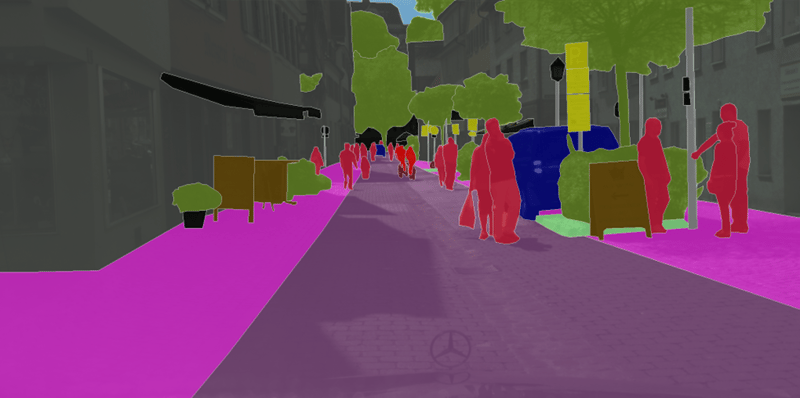
分类任务是人工智能中最常见的任务,因为它需要很少的库。我尝试使用在线编译器的资源进行编写,但不了解工作的复杂性。
def rle_decode(mask_rle, shape=(1280, 1918, 1)):
    '''
    mask_rle: run-length as string formated (start length)
    shape: (height,width) of array to return
    returns numpy array, 1 - mask, 0 - background
    '''
    img = np.zeros(shape[0]*shape[1], dtype=np.uint8)

    s = mask_rle.split()
    starts, lengths = [np.asarray(x, dtype=int) for x in (s[0:][::2], s[1:][::2])]
    starts -= 1
    ends = starts + lengths
    for lo, hi in zip(starts, ends):
        img[lo:hi] = 1

    img = img.reshape(shape)
    return img
例如,使用解码掩码0/1的功能,您可以依赖它们的长度。但要生成神经网络的批量数据包,您仍然需要监控当前结果。

def keras_generator(gen_df, batch_size):
    while true:
        x_batch = []
        y_batch = []

        for i in range(batch_size):
            img_name, mask_rle = gen_df.sample(1).values[0]
            img = cv2.imread('data/train/{}'.format(img_name))
            mask = rle_decode(mask_rle)

            img = cv2.resize(img, (256, 256))
            mask = cv2.resize(mask, (256, 256))

            x_batch += [img]
            y_batch += [mask]

        x_batch = np.array(x_batch) / 255.
        y_batch = np.array(y_batch)

        yield x_batch, np.expand_dims(y_batch, -1)
- 我喜欢将结果的中间输出与代码进行眼神交流
- 如果结果似乎不太令人满意,我会编辑之前的函数
im_id = 5
fig, axes = plt.subplots(nrows=1, ncols=2, figsize=(25, 25))
axes[0].imshow(x[im_id])
axes[1].imshow(pred[im_id, ..., 0] > 0.5)

plt.show()
结果的输出=保证与编写的代码接触。在这种情况下,不需要异常处理。




