
本教程详细介绍了如何在shopware 6管理后台的产品表单中添加、编辑和继承自定义字段。我们将利用shopware内置的自定义字段功能,通过配置xml文件来定义新的数据字段,并探讨如何在vue组件和twig模板中访问和展示这些数据,从而实现对产品信息的灵活扩展。
在Shopware 6中,为产品实体添加额外的字段以满足特定的业务需求是常见的扩展场景。例如,销售布料的商店可能需要以浮点数(如米数)来表示最小购买量。Shopware提供了一套强大的自定义字段(Custom Fields)机制来优雅地实现这一目标,而无需手动修改数据库结构或复杂地扩展核心实体。
Shopware的自定义字段功能允许开发者将额外的、可配置的数据附加到任何实体上,包括产品、客户、订单等。这些字段会自动处理数据库存储、管理后台UI的渲染、多语言支持以及最重要的——继承性。
核心原理:
使用自定义字段的优势在于其与Shopware核心的深度集成,能够无缝地利用其继承机制和管理后台界面。
要添加自定义字段,你需要创建一个Shopware插件,并在其中定义你的自定义字段集(Custom Field Set)和具体的自定义字段。这通常在插件的 src/Resources/config/services.xml 文件中完成。
以下是一个示例,展示如何为产品实体添加一个浮点数类型的自定义字段,用于表示“自定义最小购买量(米)”:
<?xml version="1.0" encoding="UTF-8" ?>
<container xmlns="http://symfony.com/schema/dic/services"
           xmlns:xsi="http://www.w3.org/2001/XMLSchema-instance"
           xsi:schemaLocation="http://symfony.com/schema/dic/services
        https://symfony.com/schema/dic/services/services-1.0.xsd">
    <services>
        <!-- 定义自定义字段集 -->
        <service id="Shopware\Core\System\CustomField\CustomFieldService" public="true">
            <argument type="service" id="custom_field_repository"/>
            <argument type="service" id="custom_field_set_repository"/>
            <argument type="service" id="language_repository"/>
        </service>

        <service id="YourPlugin\CustomFields\CustomFieldSetInstaller">
            <tag name="shopware.plugin.installer"/>
            <argument type="service" id="Shopware\Core\System\CustomField\CustomFieldService"/>
            <argument type="service" id="Shopware\Core\Framework\Uuid\Uuid"/>
            <call method="addCustomFieldSet">
                <argument>
                    <array>
                        <entry key="name">your_plugin_product_fields</entry>
                        <entry key="config">
                            <array>
                                <entry key="label">
                                    <array>
                                        <entry key="en-GB">Product Fabric Fields</entry>
                                        <entry key="de-DE">Produkt Stofffelder</entry>
                                        <entry key="zh-CN">产品布料字段</entry>
                                    </array>
                                </entry>
                            </array>
                        </entry>
                        <entry key="relations">
                            <array>
                                <entry>
                                    <array>
                                        <entry key="entityName">product</entry>
                                    </array>
                                </entry>
                            </array>
                        </entry>
                        <entry key="customFields">
                            <array>
                                <!-- 定义浮点数类型的自定义字段:自定义最小购买量 -->
                                <entry>
                                    <array>
                                        <entry key="name">custom_min_purchase_meters</entry>
                                        <entry key="type">number</entry>
                                        <entry key="config">
                                            <array>
                                                <entry key="numberType">float</entry>
                                                <entry key="min">0</entry>
                                                <entry key="label">
                                                    <array>
                                                        <entry key="en-GB">Min. Purchase (Meters)</entry>
                                                        <entry key="de-DE">Min. Abnahme (Meter)</entry>
                                                        <entry key="zh-CN">最小购买量 (米)</entry>
                                                    </array>
                                                </entry>
                                                <entry key="customFieldPosition">1</entry>
                                            </array>
                                        </entry>
                                    </array>
                                </entry>
                                <!-- 你可以添加更多自定义字段 -->
                                <entry>
                                    <array>
                                        <entry key="name">custom_max_purchase_meters</entry>
                                        <entry key="type">number</entry>
                                        <entry key="config">
                                            <array>
                                                <entry key="numberType">float</entry>
                                                <entry key="min">0</entry>
                                                <entry key="label">
                                                    <array>
                                                        <entry key="en-GB">Max. Purchase (Meters)</entry>
                                                        <entry key="de-DE">Max. Abnahme (Meter)</entry>
                                                        <entry key="zh-CN">最大购买量 (米)</entry>
                                                    </array>
                                                </entry>
                                                <entry key="customFieldPosition">2</entry>
                                            </array>
                                        </entry>
                                    </array>
                                </entry>
                            </array>
                        </entry>
                    </array>
                </argument>
            </call>
        </service>
    </services>
</container>关键点说明:
完成配置后,你需要安装或更新你的插件,并清除Shopware缓存:
bin/console plugin:install YourPluginName --activate
bin/console cache:clear
一旦插件安装并激活,并清除了缓存,你定义的自定义字段会自动出现在产品详情页的管理后台界面中。它们通常会集中在一个名为“自定义字段”(Custom Fields)的新标签页下。
你可以在这里直接输入和保存这些自定义字段的值。Shopware会自动处理数据的持久化和继承逻辑。
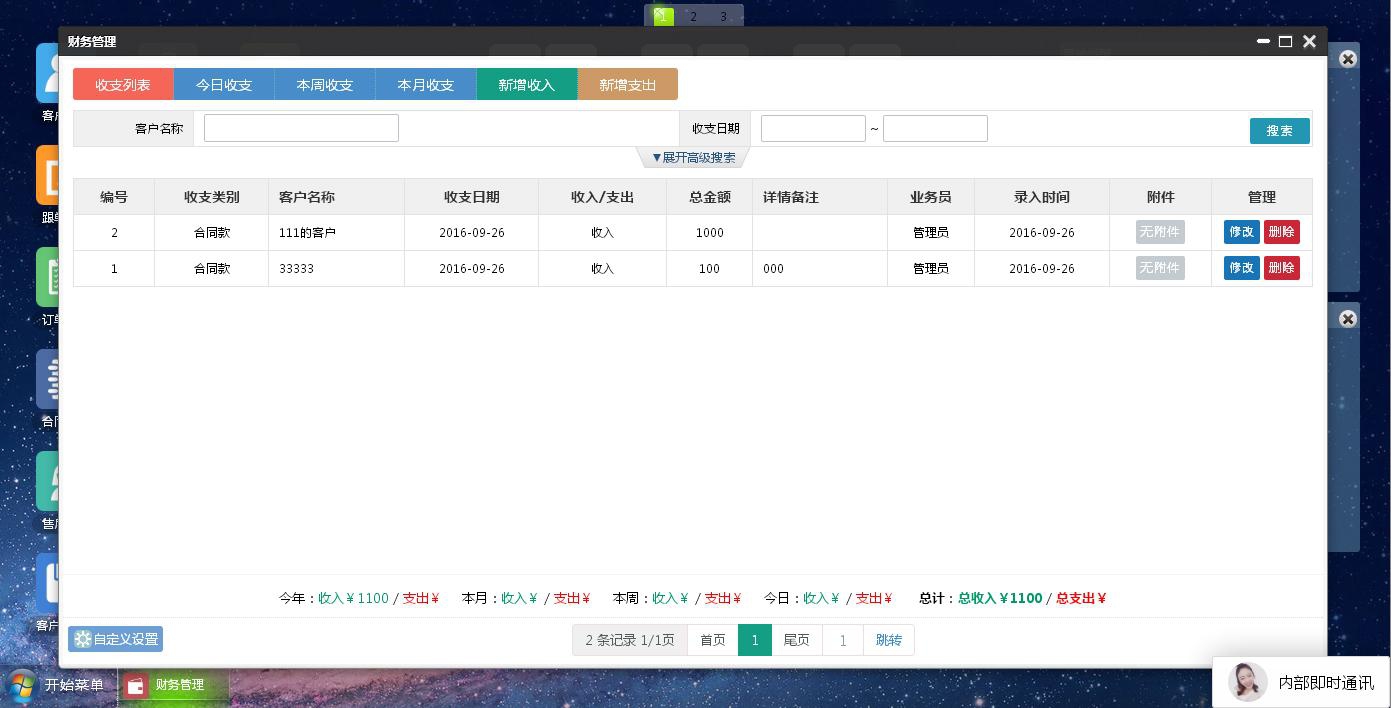
云升CRM客户管理系统主要是为了帮助企业解决在日常工作中遇到的客户管理等难题而开发,通过本系统可以对企业事务中的不同功能进行操作,用户通过自定义字段类型可以达到适合不同企业的需求。在《云升CRM客户管理系统》中管理着一个企业最为完整的客户信息,全面的客户信息覆盖在企业的市场营销、销售和服务与技术支持等企业整个前端办公领域的各个环节里。它为企业带来附加价值是不可限量的。本产品是一款针对中小企业销售管
 1172
1172

如果你需要将自定义字段显示在产品详情页的特定位置(例如,“可交付性”部分),或者需要自定义其渲染逻辑,你就需要通过Vue组件来访问和绑定这些数据。
在Shopware的Vue组件中,产品实体数据通常通过 product 或 currentProduct 属性可用。自定义字段的数据存储在 product.customFields 对象中,你可以通过自定义字段的 name 来访问它。
以下是一个示例,展示如何在 sw-product-deliverability-form 组件中,使用 sw-inherit-wrapper 将我们定义的 custom_min_purchase_meters 字段绑定到一个 sw-field:
<!-- src/Resources/views/administration/src/module/sw-product/view/sw-product-detail-base/index.js -->
<!-- 假设你已定义了一个名为 'custom_min_purchase_meters' 的自定义字段 -->

{% block sw_product_deliverability_form_min_purchase_field %}
    <sw-inherit-wrapper
        v-if="showModeSetting"
        v-model="product.customFields.custom_min_purchase_meters"
        class="sw-product-deliverability__min-purchase"
        :has-parent="!!parentProduct.id"
        :inherited-value="parentProduct.customFields.custom_min_purchase_meters"
    >
        <template #content="props">
            <sw-field
                type="number"
                :map-inheritance="props"
                number-type="float"
                :min="0"
                :label="$tc('your-plugin.product.settingsForm.labelMinPurchaseMeters')"
                :placeholder="$tc('your-plugin.product.settingsForm.placeholderMinPurchaseMeters')"
                :disabled="props.isInherited || !allowEdit"
                :value="props.currentValue"
                @change="props.updateCurrentValue"
            />
        </template>
    </sw-inherit-wrapper>
{% endblock %}代码说明:
通过这种方式,sw-inherit-wrapper 会自动处理值的读取、保存以及继承逻辑,大大简化了开发工作。之前遇到的 TypeError: e.getEntityName is not a function 错误很可能是因为尝试将非Shopware实体属性或未正确集成的扩展属性直接绑定到期望Shopware实体属性的 sw-inherit-wrapper 上。使用 product.customFields.your_field_name 这种Shopware推荐的方式可以避免此类问题。
如果你需要在店面或邮件模板等前端部分显示自定义字段的值,可以直接通过 product.customFields 访问:
{% if product.customFields.custom_min_purchase_meters is not empty %}
    <p>最小购买量 (米): {{ product.customFields.custom_min_purchase_meters }}</p>
{% endif %}Shopware 6的自定义字段功能是扩展产品或其他实体属性的强大且推荐的方式。通过配置XML文件定义字段,并利用 product.customFields 在Vue组件和Twig模板中访问数据,你可以轻松地为管理后台添加新的、可继承的字段。这种方法不仅简化了开发,还确保了与Shopware核心的兼容性和未来可维护性,避免了手动扩展可能带来的复杂问题。
以上就是Shopware 6:在管理后台产品表单中添加和管理自定义字段的详细内容,更多请关注php中文网其它相关文章!

每个人都需要一台速度更快、更稳定的 PC。随着时间的推移,垃圾文件、旧注册表数据和不必要的后台进程会占用资源并降低性能。幸运的是,许多工具可以让 Windows 保持平稳运行。

 广告
广告
 收藏
收藏
 收藏
收藏
Copyright 2014-2025 https://www.php.cn/ All Rights Reserved | php.cn | 湘ICP备2023035733号


 773
773